
Context
Despite India’s rapid economic growth, 63% of the country’s population lives in rural communities that remain underserved by basic health services and livelihood opportunities, with women and children often bearing the greatest burden. Over 58% of women and 68% of children in rural India are anemic, and most have never been screened and treated. Only 58% of young women use hygienic menstrual products. In many communities, menstruation is still surrounded by social stigmas and silence, causing girls to miss school every month or manage their periods in unhygienic ways. Women have extremely limited access to vocational training, employment, and financial services, often leaving families stuck in cycles of poverty that pass from one generation to the next.
These challenges are deeply interconnected. A girl who misses school because of her period is less likely to develop the skills she needs for employment. A woman without income can’t access healthcare for herself or her children. Addressing one issue without the others doesn’t create lasting change. This is why the Desai Foundation takes an integrated approach across health, livelihood, and menstrual equity.
Every program is designed and run by the people it serves. Local women and men are recruited and trained to become health facilitators, program leaders, and entrepreneurs in their own villages. Over 1,100 community facilitators have been trained to deliver services across 8 states. India is a very diverse country, and these programs reflect this. They follow an 80/20 model: 80% is based on proven frameworks refined over 27 years, and 20% is flexible, to be shaped by community input and needs. Rather than one-off interventions, programs run year-round, and many have been operating for over a decade. When they do leave a community, the knowledge, skills, and infrastructure remain.
Goals
Supporting women’s health and livelihoods across rural India by:
- Increasing access to preventative healthcare, early screenings, and health education in underserved rural and tribal communities where conditions like anemia, diabetes, and cancer often go entirely undiagnosed.
- Expanding menstrual health education and access to affordable, high-quality sanitary pads through the Asani Sanitary Napkin Program, while conducting awareness sessions in schools and communities to dismantle stigma around menstruation.
- Diversifying livelihood opportunities for rural women through vocational and technical training programs, including sewing, beautician skills, computer literacy, baking and saving, and entrepreneurship, allowing women to earn independent income and build financial security.
- Equiping women with skills needed for India’s growing green economy through solar technical training and EV Rickshaw mechanic programs, turning climate vulnerability into economic opportunity.
- Building long-term community capacity by training local women, men, and youth as Heroes for Humanity. Local community facilitators deliver health education, financial literacy sessions, and help families access government benefits and identity documents.
Activities
Programs are implemented directly in rural communities through local teams and community facilitators trained by the Desai Foundation, ensuring long-term adoption and sustainability:
- Community health camps that bring preventative screenings (anemia, diabetes, cancer, vision, gynecological, and pediatric health), consultations, referrals, and health education directly to rural villages, often for the first time. The flagship Bal Health Mela (Children’s Health Fair) is a children’s health fair combining screenings and vaccinations with games, puppet shows, and interactive learning, reaching over 89,000 children to date. To date, over 388,000 people have received healthcare services through our camps.
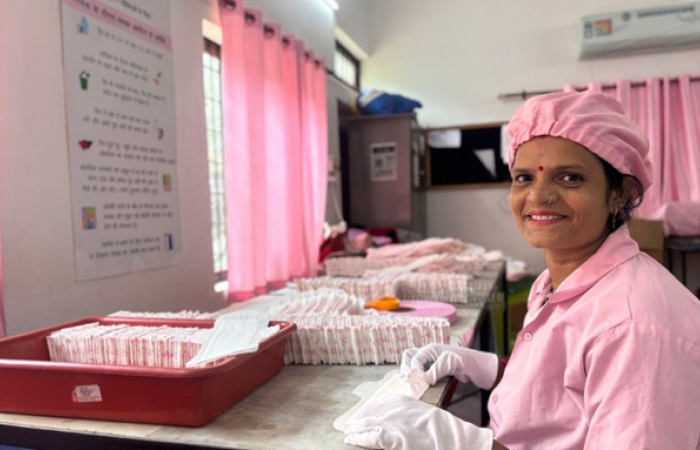
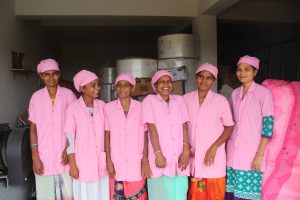
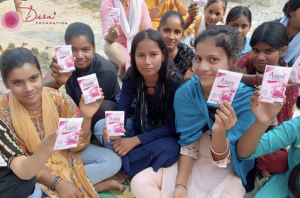
- The Asani Sanitary Napkin Program is an award-winning initiative designed by women for women. Awareness sessions break the stigma around menstruation, while at the same time, production units operated by local women manufacture high-quality, affordable sanitary napkins. The women-led distribution network delivers products to those who need them. To date, 2.1 million+ women have benefited from this program, supported by our 5 production units across 4 states, and 1,000+ women have been employed by this initiative. Through the sale of sanitary pads, these production facilities are built to be self-sustaining and reach break-even within 6 months.
- Vocational and technical training programs include sewing, beautician skills, computer literacy, jewelry, candle making, entrepreneurship development, banking, and financial literacy. These programs give women marketable skills and a path to earning their own income. Over 42,000 women have received vocational training, gaining employability, with many going on to start their own micro-enterprises.
- Climate resilience programs train women in solar panel installation and EV Rickshaw maintenance and mechanics. These programs equip them with hands-on skills necessary to enter India’s renewable energy sector and gain meaningful employment.
-
- ©Desai Foundation
-
- ©Desai Foundation
Key Performance Indicators
- Increased access to preventative health screenings and consultations in underserved communities where healthcare services were limited.
- Improved knowledge of health, hygiene, nutrition, and menstrual health measured through pre and post-program assessments.
- Increased access to and use of safe menstrual products, and improved attitudes toward menstruation across communities and schools.
- Reduction in school absenteeism among girls due to menstruation.
- Increased number of women completing vocational training, gaining employment, or starting micro-enterprises.
- Increased participation of women in renewable energy and climate-resilient livelihood programs.
Myriad Canada is working with the Desai Foundation on this project, a US and Indian nonprofit whose mission is to improve health, livelihood, and menstrual equity outcomes for underserved rural populations in India, particularly women, and children, via enhanced access to key health facilities, and health education; vocational and technical skill development; enhanced climate resilience; and improved access to high-quality, low-cost period products (Asani Sanitary Napkins) and accurate menstrual health education.
Myriad Canada’s role is to carry out charitable activities across the globe in accordance with its charitable purposes. We control and monitor the use of funds and the progress of charitable activities to ensure that donations made to Myriad Canada have the greatest impact. As a member of the Myriad Alliance with offices in Canada, the US, Europe, Asia and Australia, Myriad Canada has a vast international network and extensive practical expertise.
How to support this project?
By credit card: At the top right of this page, indicate the amount you wish to donate, and make the donation online by credit card. You will receive a receipt for tax purposes by e-mail just a few minutes after making the donation. It is simple and quick!
By cheque:
- Make your cheque out to Myriad Canada.
- IMPORTANT NOTE: We receive a lot of cheques! You must please indicate “Project D516 – Support Women’s Health in India” in the memo line of your cheque to ensure that it is allocated correctly.
- Mail your cheque to: Myriad Canada, 1 Place Ville Marie, Suite 1670, Montreal, QC, H3B 2B6, Canada.
By Direct Deposit:
- For transfer instructions, please email or call Caroline Chaulet: caroline@myriadcanada.org or +1 438 300 8122.
For Donation of Securities:
- Please email or call Caroline Chaulet: caroline@myriadcanada.org or +1 438 300 8122.
For Monthly Donations:
- We use CanadaHelps. Please find the link here.
If you need any assistance, please do not hesitate to contact us.
All donations are eligible for a tax receipt in Canada.
The projects are managed with the greatest care and professionalism.